Showing posts with label Noodles. Show all posts

Saturday, July 18, 2015

Laksa Lemak / Nyonya Laksa

Seafood-rich and creamy coconut milk curry-like gravy with a lingering spice kick, enjoy together with noodles and the rest of the fresh ingredients. Ahh... That's the bowl of warm, gently spicy comfort noodles I want now. If you are celebrating Singapore SG50, cook this! Make Laksa Party!

Salivating!


For those who stayed in Singapore or visited Singapore before, I'm sure you love Singapore Laksa, or Laksa Lemak, or also known as Nyonya Laksa, which is a popular Peranakan dish. The Peranakans are ethnic Chinese who settled in the British Straits Settlement back in the olden days.


However, as most recipes go, several variations of Laksa's were tweaked to their individual liking and can be found in different parts of hawker centres and food courts in Singapore. Although there's arguments says that Katong Laksa serves the best and iconic Singapore Laksa. They are good, but I personally feels that it could be better. I shall leave it to you to do the judgement. I shall focus more on this recipe.

This is Alan's recipe, produces thick and flavorful gravy, not as watery as what you expect at the store-bought kind. This recipe is absolutely good to host a Laksa Party at home. It feeds about 6 to 8 adults. This dish includes plenty of Southeast Asian combinations. Dried shrimps, fish cakes, cockles, coconut milk, daun kesom, chillies, lots of spices and everything nice.

Before everything else, as I was told, Rempah (also known as spices) is the soul of a good bowl of Laksa Lemak. Rempahs can be prepared way in advance, even a week ahead or so. Whenever you want to have so good bowl of soul food, you have your rempah's ready in the freezer!

So, for the first, let's begin with preparing the Rempah.

Ingredients (for Generic Rempah)
  • 70g Red Chillies, remove seeds
  • 10 Dried Chillies, soaked in hot water until soft, remove seeds
  • 5 Candlenut / buah keras
  • 110g Shallots, peeled, sliced
  • 25g Garlic, peeled
  • 20g Ginger, sliced
  • 10g Turmeric Root, sliced
  • 10g Galangal, sliced
  • 4 Stalks Lemon Grass, only slice lower 1/3 whitish portion
  • 5 Bird's eye chillies / cili padi (Optional)
Method (for Generic Rempah)
  1. Chop and blend or pound all spice ingredients together into a fine paste. (See Photo)
  2. Heat up generous amount of cooking oil over medium low heat, gently saute blended spices until fragrant. The spices should darken considerably, starts to glisten as the oil begins to separate from the paste. We identified it as pecah minyak stage for our rempah cooking. 
  3. When generic rempah is cooked, leave it completely cooled, air-tight and store it in the fridge for tomorrow use. Or if you are using it much later, do keep it in the freezer. 
Bird's eye chilli / cili padi is absolutely optional. I prefer to be more fiery. So, I added some of them in the rempah mixture. 
 

Second..... the Prawn Stock. You need some fresh prawns from the market for ideal result.

Ingredients (for Prawn Stock)
  • 1kg Fresh Prawns
  • 1 tbsp Cooking Oil
  • 500ml + 1000ml Water
Method (for Prawn Stock)
  1. To prepare the prawns - 1st, snip off the thorn on the prawn head. 2nd, snip off the eyes. 3rd, remove those dirts inside the prawn heads. 4th, remove the shells and deveinned. 
  2. Keep half amount of the peeled prawns meat well, wrapped, in a fridge for next time use. I'm using it for other dishes. While another half of the peeled prawns, blanch it under 500ml of boiled water until the prawn is just cooked. Keep both cooked prawns and boiled water for later.  
  3. In another stove, a pan heated with a tbsp of cooking oil, add in prawn heads and prawn shells. Pan fry under medium heat until they turned color and the prawns aroma is all over your kitchen. Keep an eye on it, do not burn it. 
  4. Pour 500ml of boiled water that you used to blanch prawns, and additional 1000ml water. Turn it to medium high heat, let it boil. Lower down the heat and let it simmer for 15mins.
  5. Transfer the prawn stock together with the prawn head and shells into the blender. Blits till fine, carefully strained, like making bisque. And prawn stock is ready to use.
Things to take note. Snipping away the prawn eyes and remove dirts inside the prawn head is VERY IMPORTANT. Prawn eyes and dirts are bitter. If you are going to blitz those prawn shells and heads for prawn stocks, you must remove them from the prawns. Otherwise, your whole pot of prawn stock will have bitter aftertaste. My mom used to own a prawn noodles stall when I was very young. This tips is her great advice. I would't wanna take the risk. I will listen to her.


Thirdly... the Laksa Gravy. You can only do this when your generic rempah and prawn stock is ready for use.

Ingredients (for Laksa Gravy)
  • 400g Generic Rempah (as above)
  • 1.5 tbsp Coriander Seeds / ketumbar
  • 100g Dried Shrimps
  • 1 tbsp Toasted Belacan Powder
  • 800ml Fresh Coconut Milk
  • 1500ml Prawn Stock (as above)
  • 6 sprig Daun Kesom / laksa leaves
  • 3 tbsp Sugar, adjust to taste
  • 2 tsp Salt, adjust to taste
  • 2 tbsp Cooking Oil
  • 16 Fish Balls
  • 10pcs Tau Pok, snipped into strips
Method (for Laksa Gravy)
  1. On a small pan, start off with dry-frying the coriander seeds until they are aromatic before milling them into fine powder. The recipe ask for 1 tbsp coriander seed, but I used 1.5 tbsp instead. Sift the milled coriander powder as we only need those fine coriander powder for the gravy. Coarse coriander seeds that doesn't pass through the sieve, and this explains why I use 1.5 tbsp instead, because some will be discarded. 
  2. Dried shrimps needs to be washed and soaked for awhile before grinding them finely into floss using a food processor. 
  3. With a big pan, heat up some oil, add in generic rempah, coriander seeds, dried shrimps, and toasted belacan powder. Fry till fragrant.
  4. Add in prawn stocks and bring to a boil. And followed by coconut milk to create the base. Add more water if needed as you have to build your own preferred gravy consistency. 
  5. Add in daun kesom to the gravy. This gives another level of dimension to the laksa gravy. Add in salt and sugar at this point of time. Give it a taste. Make sure you adjust to the saltiness and sweetness to your individual liking.
  6. Strips of tau pok are then added to soak up all that wonderful richness from the broth. Also, you can add in fish balls at this time to allow it to simmer together. Do this on medium heat for a few minutes and then switch off fire. Do not cover the pot with lid.

Lastly, prepare the rest of the condiments and assembling.

Ingredients (for Condiments and Noodles)
  • 800g to 1kg Rice Vermicelli
  • 500g Cooked Prawns (prepared as above)
  • 300g Bean Sprout
  • 3pcs Large Flat Fish Cakes
  • 4 Hard Boiled Eggs, assuming one portion of laksa only need half eggs
  • 500g Fresh Blood Cockles (weight with shell on)
  • 2 to 4 sprigs Daun Kesom, julienned
Please buy the freshest blood cockles from the market on the same day. Bring home and remove from the shells on your own. Try not to buy those that's sold in bags that shells had been removed for your convenience.


For those who wants some special sambal chilli to go along, as shown on the picture, here's my recipe that I've created on the spot just before the Laksa Party begins.

Special Sambal Chilli (Optional)
  • 70g Generic Rempah
  • 20g Dried Shrimps, washed, soaked, flossed
  • 50g Shallots
  • 3 tsp Sugar
  • some shallot oil
In a pan, put everything together, sautee until fragrant. And now, with everything is ready, the Laksa Party begins....

To Serve
  1. Blanch one portion of rice vermicelli as well as beansprout over a pot of hot boiling water. Drain the water thoroughly before pouring the noodles onto the bowl.
  2. Ladle some hot Laksa gravy onto the noodles. Arrange some fish cakes, hard boiled eggs, blanched cockles on top. Add more laksa gravy over the ingredients if you prefer. 
  3. Garnish with julienned daun kesum, and serve along with some sambal cili immediately. 

The recipe is complicated as it uses alot of ingredients. But I assure you that you will be able to make this a success if you follow my recipe, and let me walk you through the proper preparation of every element. I have to thank Alan for his detailed recipe for sure. He gave me so much insight to this noodle dish.

As an optional idea, you can cut up the noodles, so that the whole dish can be slurped up with a soup spoon, without the need for chopsticks. It's up to individual's preference.


The laksa gravy is thick. I like it that way. This way, the noodles are well binded together with the laksa gravy when eating.

Now that I've tested the recipe, and proven that it works! I would encourage you to do the same, re-invent it to suit your astoundingly acute palate.

You want a bowl right now?


I hope you enjoy it as much as I do. I definitely will recreate this recipe again and again.

Monday, March 23, 2015

客家板麺 Malaysian Hakka Pan Mee

Do you prefer Pan Mee or Mee-Hoon-Kuay?

Some says they are the same. Some argues that they are different, but that's due to the shape of the noodles. Pan Mee (
板麺, pronounced as Ban Mian in mandarin) is a Hakka-Style noodle, originating from Malaysia. Some translate it as "flat flour noodle", while some, translate it as "board noodle".

Flour hand-kneaded into dough traditionally torn into smaller pieces of dough by hand, but such laborious work is conveniently replaced by machine that can produce variety of shapes. Pan Mee typically served in soup, together with dried anchovies, minced pork, mushrooms and leafy vegetables. In my hometown, 树仔菜 (aka pucuk manis / manicai 马尼菜) is used.

My grandmother used to cook this delicious noodles for us. Usually she will let us have our choices of Pan Mee or mee-hoon-kway, and she will prepare the dough accordingly. That's one of the sweetest childhood memory. All she need is pack of flour, some anchovies and vegetables. She can cook up a comforting bowl of soup dish for everyone in the house. My grandmother has 12 child. My mom is the youngest, the last amongst the 12th. I haven't even tell you the number of grandchild she have. You can imagine that now. My grandmother is a wonder woman!


Because this is a very simple noodle soup dish, the soup plays a very important role in the preparation of Pan Mee. I've seen variations in soup base preparations. But for my grandmother, she use only dried anchovies and soya bean for the soup. Yes. Only two ingredients, but it makes great and flavorful soup base. Sometimes, the simpler it is, the better it taste.

I'm very straightforward and I'm not afraid to tell you. I don't have my grandma's exact recipe. I only vaguely remember what are the main ingredients my grandma use. I found Alan's recipe is the closest to my grandma's simplicity. So, I just followed, but with minor modifications.
Ingredients (Serves 4)
(Source : Alan, with slight modification)

for Soup
  • 65g Dried Anchovies (aka Ikan Bilis / 江鱼仔)
  • 180g Soya Beans (黄豆)
  • 10 cups of water
  • 1 tsp salt (adjust to taste)
for Noodles
  • 250g Plain Flour or All-Purpose Flour 
  • 2 Eggs
  • 1/4 tsp Sea Salt
  • 5-7 tbsp water, adjust according to dough texture
  • 1 tbsp cooking oil 
  • flour for dusting
for Minced Meat Sauce
  • 300g Minced Pork (绞肉), preferably ground pork belly
  • 4 Chinese Mushrooms (香菇), soaked till soft, cut into strips
  • 2 Black Wood Ear Fungus (黑木耳), soaked till soft, cut into strips
  • 4 cloves Garlic, peeled, chopped finely
  • 5 Shallots, peeled, chopped finely
  • 2 tbsp Oil
  • 2 tbsp Dark Soya Sauce
  • 1/2 tbsp Oyster Sauce, adjust to taste
  • 1/2 tbsp Sugar, adjust to taste
  • 1/2 tsp Pepper
  • 1 tsp Corn Flour, to be mixed with mushroom soaking water
other ingredients
  • a bunch of 树仔菜 (aka pucuk manis) or Choy Sum 菜心 or any of your favorite green leafy vegetables that serves 4 sharing. 
  • 4 Eggs
  • Fried crispy anchovies 
  • Fried crispy shallots (optional)

Variation
  1. For the soup, there are some Pan Mee sellers likes to add pork bones into the soup to create extra sweetness. Some uses soya beans, some don't. But the general rule is... dried anchovies should be there.
  2. My grandma will only provide minced meat sauce and eggs when her budget allows. Eggs are usually cracked onto the soup and cook together with the noodles. It would be too costly for her to add eggs on every serving. 
  3. I personally prefers 树仔菜 (aka pucuk manis), but when first preference is not available, I shall go for my alternative Choy Sum 菜心.
  4. Fried crispy shallots is optional. But most Pan Mee stalls provide this topping. 

Method (for the soup)
  1. Give dried anchovies and soya beans a quick rinse.
  2. Soak soya bean in hot water for 20mins. Using both finger tips, rub away the skin from the soya beans. This is quite tedious. You can choose to skip this step if you are feeling lazy. 
  3. In a large soup pot, add 2 tbsp of cooking oil, add in anchovies, stir fry anchovies till fragrant. 
  4. Add in water and prepared soya beans, and bring to a boil. Lower flame to simmer with lid on for 20mins. Season with salt, turn off flame and leave to steep. 

Using both finger tips rub away the skin from the soya beans.


Stir fry anchovies till fragrant before adding in water. Fried anchovies will give you more flavorful soup.

Method (for the noodles)
  1. Combine flour and salt in a large mixing bowl. Form a 'well' in the middle and crack in the eggs.
  2. Add cooking oil and begin to combine everything together, adding water slowly by individual tablespoons until a non-sticky dough is obtained
  3. Dough needs to be kneaded repeatedly until smooth and uniform in color. 
  4. Cover dough with cloth and set aside to rest for 30 to 40 mins to relax the gluten. 
  5. After resting the dough long enough, go back to the dough by first dividing the dough into 4 portions. 
  6. Using pasta machine, process individual dough portions by repeatedly laminating and thinning the dough into elongated flat sheets before cutting into taligatelle-like strands. Dust some flour on the noodles to prevent noodles from sticking together. If pasta machine is not available, simply roll dough with rolling pin, on a flat surface dusted with flour, into elongated sheets before folded the dusted sheets slightly and cutting into strips. 
  7. If you are making mee-hoon-kuay, simply hand stretch the flat sheets dough into desired free-style shapes accordingly.

Method (for the meat sauce)
  1. In a saucepan, heat up 2 tbsp cooking oil. Add chopped garlic and shallots, stir-fry until shallots turned translucent and aromatic. 
  2. Add minced pork followed by all seasoning and stir-fry until meat is cooked and uniform in color. 
  3. Add in mushrooms strips, black wood ear fungus strips, and some mushroom soaking water. Stir well and cover with lid. Leave to simmer over medium low heat for 10mins. 
  4. Add some corn starch mixed with some mushrooms soaking water to thicken the sauce. 
  5. Dish up, covered, and set aside. 

Everything is prepared for the meat sauce.


Meat sauce is well cooked and in uniform color.

Method (to cook pan mee)
  1. Prepare two heavy saucepan. One side is 2 ladle cups of boiled water, another side is 2 ladle cups of soup base. Bring both to a boil
  2. Add a serving of noodles into the boiling water saucepan, cook noodles for a minute. Transfer half-cooked noodles into the soup base saucepan, and add a serving of vegetables. Adjust your cooking time accordingly.
  3. When noodles are cooked, crack an egg into the middle of the pot and leave it with lid on briefly for about 20 secs for the white to cook slightly.
  4. Ladle everything into a serving bowl, try not to break the yolk. Garnish generously with one portion of meat sauce, fried crispy anchovies, fried crispy shallots and serve!
You can, of course skip the part of using boiling water saucepan. You can just throw in your noodels and just cook it in the soup straightaway. However, the noodles will make your soup broth looked cloudy and thickened a little. I personally prefers to half-cook the noodles in boiling water first, as this step allows me to have nicer and clearer broth.

Pan Mee... Long, flat striped noodles.


While mee-hoon-kuay is free-style shaped flat dough by simply hand stretch the flat sheets dough in organic forms. There's no rocket science. Everyone can do this. To me. it should look homely and comforting. There's no rules here.


Look at my Pan Mee soup. The soup is quite clear and less cloudy compared to those selling outside. Although there's extra effort in cooking process, but this will make your noodles taste better in overall.


In Kuala Lumpur, Klang Valley, there's a popular version of Pan Mee that is prepared dry version. Everything is the same, just that they are without the soup, fiery dry chillies flakes are added, topped with some spring onions and stirred into noodles. That's another great way of enjoying Pan Mee.

Maybe next time I will try making dried version of Pan Mee.


I love this soup noodles. I think everyone should make this at home at least once. This just involves a few ingredients, and I guarantee you that this is a great bowl of comfort food, and something easy to prepare for weekend lunch for family.

So.... do you prefer pan mee? or mee-hoon-kuay?

Monday, January 13, 2014

Shrimp Roe Wanton Noodles / 虾籽云吞捞麺 - (AFF - HK / Macau #3)

I love shrimp roe noodles. I had this in Macau last month and I'm absolutely in love with it. The noodles itself has mild salty shrimp taste. And when I toss the noodles with the shrimp paste and soy sauce dressing.... Fwoh! Addictive!

Especially when it is cold weather, one serving might not be enough!


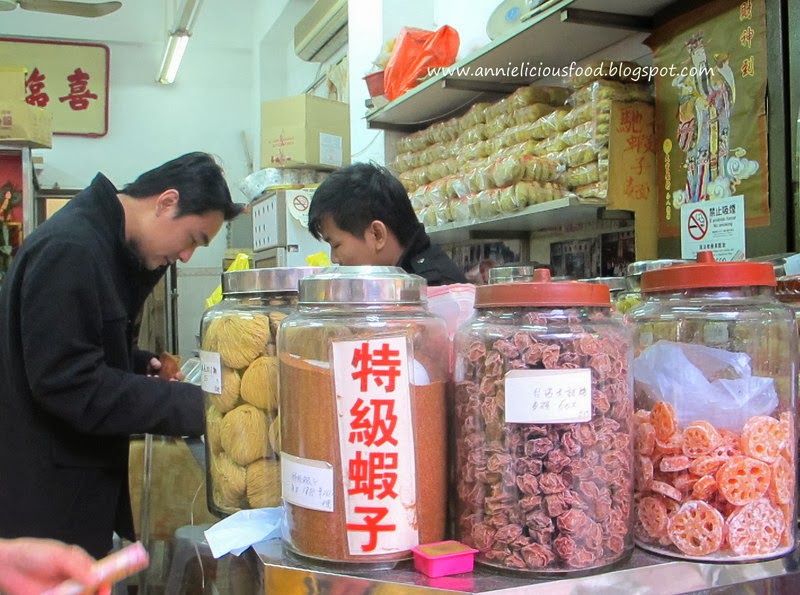
I stayed at 新马路 area when I was in Macau. Just walk down the road, I found 喜临门麺家 at 十月初五街38号. This shop sells authentic and traditional Shrimp Roe Noodles (虾籽麺) and some good quality Shrimp Roe (虾籽) as well.


Shrimp roe wanton noodles is common in Macau and also Hong Kong. I had a random chat with the noodles shop owner. I was told that this palm sized hard bundle of shrimp roe noodles is originated in Macau, and this delicious noodles then spread to Hong Kong. Whether it is originated in Hong Kong or in Macau, I didn't specifically do any research on that. I just listen to what the noodles owner say. However, it might be true, because the location of this shop is very near to the sea port. Getting shrimp roe should be easy I guess.


Since I knew Singapore seldom import good shrimp roe noodles and as far as I know, getting shrimp roe in Singapore is not so possible. Without even thinking, I immediately bought some shrimp roe noodles and shrimp roe. So that I could cook for AFF.

I walk down further. And I randomly walked into a noodle shop, and ordered a serving of Shrimp Roe Wanton Noodles (虾籽云吞捞麺). It is not difficult to identify what's in the noodles. Other than the wantons served, it has shallot oil, dark soy sauce, soy sauce, shrimp paste as dressing on the noodles, and then topped with shrimp roe and spring onions. This is the serving that I had in Macau.


Max is very excited to try this noodles. Less than 3 days after we are back to Singapore, he already kept telling me that he wanted to eat shrimp roe noodles. Looking at this piece of dried noodles. One of the special characteristic that distinguish this noodle from many other varieties of Chinese noodle is the salty shrimp roe forming tiny black spots on strips of the noodles.


You don't have to go Macau or Hong Kong just to get shrimp roe noodles. Cold Storage do sell. However, maybe the quality and taste might vary a little.

I also bought a bottle of shrimp paste from Macau. This shrimp paste taste like belacan (The usual shrimp paste found in Malaysia and Singapore), but this Macau shrimp paste is more fine and spread-ably soft texture. If you can't get this, I'd suggest you to use the ordinary belacan, mix with water until it achieve thick dripping consistency, just like dark soy sauce kind of thickness.


Because this noodle has mild saltiness on its own, the most common method of cooking is directly boiling the noodles and drizzle over some sauces for additional flavorings. This noodles is not difficult to replicate. All you need is to go to the Cold storage, buy shrimp roe noodles, get some belacan, and make some wanton to go along.

Ingredient (for Noodles)
  • 1 Shrimp Roe Noodles
  • ½ tsp Shrimp paste (or belacan), mix with water, until thick dripping consistency
  • ½ tsp Dark soy sauce
  • 1½ tsp Soy sauce
  • 1 tsp Shallot oil
  • 2 tsp Shrimp Roe as topping
  • some spring onions as garnishing
This makes one serving of noodle. For dressing wise, do play around with it to suit your taste. You may consider shrimp paste as an optional, as I know it is not easy to get. One serving of noodles only use a few drops of shrimp paste. So, don't stress yourself too much.

Ingredient (for Wanton) 
  • about 50g Minced Pork
  • 10 Fresh Prawn, deveined, shells removed, cleaned, pat dry, cut prawns into half.
  • Some store-bought Shanghainese wanton skin
  • ½ tbsp Soy Sauce
  • ½ tsp Sugar
  • ½ tsp Corn flour or Tapioca flour
  • a pinch of salt and dash of pepper to taste
This makes about 10 big wantons or more. It depends on the size of your wanton.

Method
  1. Put all wanton ingredients together. Using chopstick or fork, stir them vigorously until all ingredients are well mixed and the minced pork are well blended with condiments and looked gluey.
  2. Wrap wanton accordingly. Cook wanton in hot boiling water. Once they are done, remove from water. 
  3. Cook shrimp roe noodles in hot boiling water until noodles are soft. 
  4. Once noodles are cooked, drizzle over shrimp paste, dark soy sauce, soy sauce, shallot oil. And then top with shrimp roe and spring onion as garnishing.
  5. Serve noodles with wantons at the side. 

Look at the size of my wanton. They are big. I wrapped 1 prawns in each wanton. Hehe..


And shrimp roe wanton noodles done! Max says this taste really like the one we had in Macau!


Pretty straightforwared eh. As long as you get the ingredients right, I think this is not difficult to replicate. So, do go down to Cold Storage and buy some shrimp roe noodles and make some wantons today!


Do try it out!

I am submitting this post to Asian Food Fest ( Hong Kong + Macau ) – Jan+Feb Month hosted by Annie of Annielicious Food

Sunday, November 17, 2013

Pad Thai (ผัดไทย) / Thai Stir-Fried Rice Noodle - (AFF - Thailand)

Time flies really fast. It's November already and it's Thailand month for Asian Food Fest.

This stir-fried rice noodle dish is commonly found along the street or at casual local eateries everywhere in Thailand. Pad Thai is also one of the Thailand's national dishes and has become popular in many countries. Just walk into any of the Thai restaurant or eateries, they definitely have Pad Thai in the menu.


Other than the usual Tom Yum Goong (Thai sour and spicy soup), Pad Thai is one of my favorite food. 5 years ago, I went Bangkok, and I didn't get to eat any good Pad Thai. 3 months ago, Max brought me, my MIL and friends to Phuket for vacation. And he brought us to one Thai fine dining restaurant beside JW Marriott for some authentic thai food. I ordered Pad Thai, and I'd say, that's the best Pad Thai ever! I still remember how it taste, but I didn't take photo of it.


Pad Thai is indeed a significant street food that I personally adore so much. Traditionally, prawns are used in Pad Thai. However, chicken or pork Pad Thai is also found commonly nowadays. If I were to describe the taste of this dish, the tang from the tamarind pulp, the special saltiness from fish sauce (Nam pla น้ำปลา), the sweetness from the palm sugar and the hot from the red chilli pepper. Fwoooh!!! I love it!!!

It may looked simple, but I have to confess that, to make a good serving of Pad Thai do need abit of patience here.


The list of ingredients here is quite long. If you are looking more into traditional Pad Thai recipe, this is it. However, in such modern days, people do tends to modify or forgo some of the ingredients when they cook it at home. Hence, it's eventually up to you to decide what kind of Pad Thai you want to serve.

Ingredients (Serves 3 to 4)
(Source : She Simmers, with modification)

  • 200g Thai Dried Rice Noodles
  • 4 tbsp Ground Nut Oil or Cooking Oil
  • 100ml Pad Thai Sauce *See below for recipe, also see Note
  • 2 cloves Garlic (8g), peeled and finely chopped
  • 1 medium Shallot (20g), peeled and finely chopped
  • 24g Chopped Preserved Radishes (a.k.a 菜圃)
  • 8g Shell-On Dried Krill
  • 100g Firmest Tofu you can find *See Note
  • 220g Large prawns, peeled and deveined
  • 2 Large Eggs
  • 110g Bean Sprout
  • 5 stalks of Chinese Chives (韭菜), about 50g

For Pad Thai Sauce
  • 36g Fish Sauce
  • 45g Palm Sugar (I used Gula Melaka)
  • 12g Brown Sugar
  • 30g Tamarind Paste rub in 40g Water, discard the seed
For Garnishing
  • Sugar
  • Dried red pepper flakes
  • Fresh Lime wedges
  • Chopped roasted peanuts
  • Extra tofu
  • Extra bean sprouts, soaked in water to keep them fresh and crunchy
  • Chinese chive stalks
  • Red Chilli (Optional)
  • Coriander (Optional)
Preparation 
  1. Soak Dried Rice Noodles with water for 1 hour or until it is completely soften, drained.
  2. In a small saucepan, put all Pad Thai sauce ingredients in and cook over medium heat. Stir constantly until the sugars have dissolved. Once the sauce is boiled, remove sauce from heat and let it cool down for later use.
  3. Cut the chive blades into 1-inch pieces, reserve the bottom parts of the stalks to eat with the finished dish. And also, prepare all the necessary ingredients and ensure everything is in place before you start cooking, included the garnishing.
Note : 
  1. Just one thing that you have to take note. Get the firmest tofu that you can get. Thai style firm tofu (used for Pad Thai) is yellow on the surface. I asked one of the Thai lady who run a Thai eatery in Golden Mile, as I want to know where to get it. She smiled and say "It is just tofu. If you cannot get it, you can just rub some turmeric powder on it and make it yellow. Color doesn't matter. It just looks nicer only". I'm glad to have her assurance. So, I go ahead to get a block of ordinary firm tofu and rub it with turmeric powder. However, I think this is absolutely optional :)
  2. The Pad Thai sauce can be made in advance. It freezes well. You can also cook the sauce in bigger batch, freeze the sauce in an ice cube tray, then pop out the frozen cubes and keep them in a freezer bag. Thaw out only what you need at a time. 
Method
  1. In a flat non-stick pan, set over medium-high heat. When the pan is hot enough, add 2 tablespoons of ground nut oil.
  2. Once the oil is hot, immediately add the noodles in, followed by the sauce. Stir constantly. I used a spatula and a pair of chopsticks to keep the noodles moving all the time.
  3. about 40 seconds, you should be able to feel that the noodles have softened up considerably. Pls go ahead and taste the noodles to see if it is soft enough to your liking. If it doesn't, continue to cook further. Do splash some water to the noodles to soften it further if needed. Reduce the heat if needed too.
  4. Push the noodles to one side of the pan and add the remaining ground nut oil to the empty side of the pan.
  5. Add in garlic, shallot, preserved radishes, dried krill, tofu and fresh prawns.
  6. This is the critical point of process - Do whatever you can to keep the noodles moving almost constantly to keep them from burning or forming excessive crust at the bottom, at the same time, get the shrimp to cook about half way through, AND keep the small bits of the stuff in the pan from burning.
  7. Once the fresh prawns is turning abit opague on both sides and all the small bits are getting brown, make a well in the middle into which you add the eggs.
  8. Break and scramble the eggs with the tip of your spatulas; let them cook undisturbed on one side before flipping and breaking them into smaller pieces, keeping an eye on the other members of the pan the whole time, especially the noodles.
  9. By the time the eggs are cooked, the prawns should be fully, but not overly cooked. The noodles are soft and chewy and the sauce has been entirely absorbed into the noodles. You will also noticed that the little bits has crisped up and kinda caramelized. Heat off immediately.
  10. Add in the 1-inch Chinese chives and bean sprouts to the pan and give it a quick but gentle stir. The intention is to wilt the bean sprout and chives while getting all the bits thoroughly interspersed into the noodles. Serve the Pad Thai immediately, or you can let it cool for 8 to 10 minutes in the pan. I did rest my Pad Thai for awhile, and I think it is at its best when the noodles gets to rest awhile :) 
  11. To serve - Refer to my photo and you will know what are the condiments and garnishing to go along with Pad Thai. Do season with extra fish sauce if you wish. I'd highly recommend you to add dried red pepper flakes for extra kick. I love it!
This is exactly how it looked like (I mean the amount of condiments and garnishes to go along with) when I had my Pad Thai at Ginja Restaurant Phuket :)


On a note, I source all my ingredients at two location. One is at Golden Mile Complex, Beach Road. And another one is at Sheng Siong, Chin Swee Road.

The Thai Dried Rice Noodles : I got it from Golden Mile Complex. They have a Thai super-mart there. They sell everything about Thailand and Vietnam stuffs. Do remember that this Thai dried rice noodles has different thickness. You may choose the thinner ones for shorter cooking time (I assume). However, I'd chosen the thicker version because this is the exact thickness of rice noodles that I had when I'm in Phuket :)


The dried krill : I have it at home. I got mine during my trip to Tokyo last year. It looked very much the same as the one I saw in Thailand last time. So, I decided to go ahead to use it without buying. However, I strongly believe that Golden Mile Complex Thai super-mart do carry this. Do ask around.

The rest of the ingredients : I just make a trip to Sheng Siong and I've got everything I want. No stress at all.


These are all the condiment and garnishing needed for Pad Thai. So, do prepare way ahead. Once your Pad Thai is cooked, you can use it immediately.


If you never try Thai food before, this might be a good dish to start with to introduce yourself to Thai food. It has a good combination of classic flavors and it is mild and not so spicy.


This Pad Thai recipe is quite delicious and the recipe is not difficult to follow. The key is to read every single steps, draft out the shopping list to ensure you didn't miss out anything when you shop for ingredients. Get everything ready before you start cooking. If you follow this, you won't go wrong.

So, don't feel stressed. Keep calm and get cooking! :)


Like Pad Thai? You don't have to go to Thailand. Cook it at home over the weekend!

Today marked a very significant day in my life. After I struggled and neglected my blog for a year, I finally completed my program and I can now spend more time cooking, baking and for myself. Oh..Happy Day!!!! :)


I am submitting this post to Asian Food Fest ( Thailand ) – November Month hosted by Lena of frozen wings

Wednesday, August 14, 2013

Kampar Prawn Noodles wannabe (金宝 "马来王" 虾麺) - (MFF - Perak)

My 2nd replication dish for Perak's Malaysian Food Fest . Ma Lai Wong prawn noodles (金宝 "马来王" 虾麺), the original prawn noodles and braised pork ribs in Wing Lok Yuen coffee shop in Kampar during the olden days. And as I mentioned before, Ma Lai Wong's prawn noodles and braised pork ribs is one of the "must-try" food in Kampar back then. 


The taste of the olden days prawn noodles is still in my memory. Ma Lai Wong prawn noodles has been around in Kampar for many years, handed down from father to son and it is once a popular haunt for the locals back then in the late 70's and early 80's. The prawn noodles stall was first located in Wing Lok Yuen coffee shop (永乐园茶餐室), in Kampar, Perak. But now, they have moved, and now  located right smack along the Kampar town main road towards UTAR, the shop at one corner right after ACS school, opposite ESSO Station.

I visited Ma Lai Wong coffee shop a month ago. As I mentioned in my previous post about Kampar Braised Pork Ribs Platter (金宝 "马来王" 卤排骨), and I kinda feelin' sad about the visit.


The cook has changed, and the taste has changed, the look has changed, the chilli has changed. And of course, price has changed too. This is for sure. The only thing remain is the name "Ma Lai Wong" printed on the signboard. 

They serves 2 types of noodles. 1st type is Pork Ribs Noodles, which they actually pour over braised pork ribs and it's sauce onto the cooked noodles. The 2nd type is the Prawn Noodles with the choices of thick yellow noodles, normal type of yellow noodles, or even rice vermicelli (beehoon) too. I ordered a bowl of prawn noodles, intentionally asking for thick noodles. Request to add some small intestines to go along. 1st sip on the soup, I stare at my mom, and I said "Mom, this is sugar-overloaded soup. Not like before". She ask me to take a look at the owner and the entire coffee shop's environment. The owner's style is quite laid back I'd say. The typical retired man just wanting to keep the family business going type. I don't see any cooking nor foodie passion in him. 


When I was 5, my mom used to sell prawn noodles in Kampar too. The taste of my mom's noodles and ribs is pretty close to Ma Lai Wong's one. My mom said, they used to call it "Kampar style" during the old days. The only difference is that Ma Lai Wong's name is somehow more famous and has become a kind of recognition by the locals.

Okay, enough with the story. So, here's my replication of Ma Lai Wong's olden day's prawn noodles wannabe with my mother's recipe.

Ingredients (Serves 5 to 6)
(Source : My Mother - Mdm. Chai)

for the soup
  • 1 kg Fresh Prawns + some extra prawn shells and head (*see note)
  • 2 pcs Pork BIG bones (or more if you want)
  • 30g Anchovy Fish
  • 35g Rock Sugar
  • 1½ tsp Salt
  • 1½ tsp Chicken Stock or Anchovy Stock
  • 50g Fried Shallot
  • 1.5L Prawn broth
  • 1.3L Water
for the condiment
  • cooked prawn meat from the 1kg prawn
  • 1kg Vermicelli (Beehoon) or mixture of both Vermicelli and Yellow Noodles. 
  • some fish cakes
  • some pork lean meat, cooked, sliced.
  • some beansprout, about 150g should be fine
  • some kangkong  (*see note)
  • some fried shallots
for the chilli  (*see note)
  • 5 fresh Red Chilli, finely blended
  • 5 tbsp Chilli Boh (or more)
  • oil from frying prawn head
  • 50g Fried Shallots 
  • 45g Garlic, minced
  • 25g Dried Shrimps, finely chopped
  • 15g Belacan, chopped into small pieces
  • 2 tbsp Sugar
  • ½ tsp Salt
  • ½ tsp Chicken Stock

Note : 
  1. My mother do not know about Ma Lai Wong's chilli sauce. She said she suspect Ma Lai Wong's chilli sauce might be supplied chilli sauce by food supplier. But well, we are not sure. So, instead of replicating Ma Lai Wong's chilli sauce (which we totally have no idea), she gave me her own prawn noodles chilli recipe, which I really like it. So, this chilli is absolutely optional, although it is really good to have.
  2. Kampar prawn noodles doesn't serve with kangkong. Singapore prawn noodles does. I added it in because Max insisted to have them. So, kangkong is absolutely optional. 
  3. I used to accumulate prawn shells and heads. Whenever I need prawns for stir frying. I will use the prawns meat, wrap up the prawn shells and heads, keep in the freezer nicely. When I have kept enough of em', I can use them too cook up a pot of nice prawn soup. So, do add extra prawn shells and heads in the soup for better result.  
I have my full trust on my mother's recipe as I eat her prawn noodles and braised pork ribs platter almost everyday when I was a kid. 

Preparation
  1. In a wok, boil 1L water, blanch the prawns till cooked. Keep the prawn broth, drain the prawns and let the prawns to cool down. Once prawns cooled down, remove the prawn shells and prawn head. Set cooked prawn meat aside as part of the condiment.
  2. In a wok, add half cups of cooking oil. Fry prawn shells till fragrant. Fried prawn shells are for soup. Keep the oil. We need it to cook the chilli. 
  3. In a saucer, boil some water and cook the pork loin. Once cooked, let the pork cool down before cutting them into slices as part of the condiment.
Method

for the soup
  1. In a soup pot, add in pork bones, anchovies, fried prawn shells, rock sugar, prawn broth and water. Bring to a boil, and let it simmer on high heat for 3 to 5mins. 
  2. Lower down to low fire and let it simmer for 20mins.
  3. Add in fried shallots, still under low fire, continue to simmer for another 20mins. 
  4. Once done, add in salt and chicken stock to taste. The soup should taste slightly salty. 
  5. Discard all the prawn shells, anchovies and pork bones and the soup is ready.
for the chilli
  1. In a wok, add in the oil from frying prawn head, garlic, fried shallots, garlic, dried shrimps, belacan. Fry till fragrant. For about 8 to 10mins or so. 
  2. Add in sugar, salt, chicken stock, fresh chilli and chilli boh. Fry for another 2mins. Heat off. 
to serve
  1. Boil a pot of water, cook the noodles together with bean sprout. And of course, kangkong is optional. Drain. 
  2. Place cooked noodles and beansprout on a bowl. Add in cooked prawn meat, pork loin slices, fish cakes and pour in the hot prawn soup. 
  3. Garnish with fried shallots and serve immediately, preferably with Kampar Braised Pork Ribs Platter (金宝 "马来王" 卤排骨). And here... Kampar Prawn Noodles wannabe! 

The recipe for the soup is not something complicated. And I really like the taste of it. 


And everything in the pot, let them simmer away... 


After 45mins, this flavorful soup is done! Discard all the prawn shells, anchovies and pork bones.


When I look at my prawn noodles photo, I hate myself so much! Because I didn't add enough soup on the bowl and the noodles absorb the soup so so so fast! By the time I finished shooting, I gotta rush for other errand because I have friends at home waiting to eat my prawn noodles. After all my friends left, I checked on my photo, my heart sunken like a titanic. It indeed looked deceiving. My prawn noodles looked like dried prawn noodles. Where's the soup?! How disappointing.


I did wanted to cook 2nd attempt just for photography purpose. But think again, I really don't have enough time for that, and I won't be inviting guests to come over to help me finish them up. So, I dropped the idea.

This recipe is indeed a keeper. I definitely will keep it and cook it again when I have the opportunity. Thanks mom! :)


I am submitting this post to Malaysian Food Fest Perak month hosted by WendyinKK of Table for Two….or more.